


Towards esame Cambridge A2 Key – Reading Parts 3 and 4 – From Boys to Beatles
Destinatari: studenti di scuola secondaria di primo grado, livello A2
Contenuto della risorsa
- Testo in inglese dedicato alla storia dei Beatles, seguito da esercizi di comprensione e uso della lingua.
- Due sezioni principali sul modello Cambridge: 5 domande a scelta multipla sulla lettura (Part 3) e 6 domande cloze (Part 4).
- Attività aggiuntive di lessico (abbinamento contrari) e grammatica su forme verbali e strutture semplici.
- Consigli strategici per affrontare le parti Reading dell’esame.
Obiettivi didattici e benefici per gli studenti
- Potenziamento delle strategie di lettura mirata e scanning del testo.
- Consolidamento della comprensione scritta a livello A2, con focus su strutture multiple choice e cloze.
- Arricchimento del vocabolario inglese e miglioramento della grammatica di base.
- Incremento dell’autonomia nello studio e nell’autovalutazione delle conoscenze in previsione delle certificazioni linguistiche.
Come utilizzare la risorsa in classe
- Ideale come simulazione reale di Reading Parts 3 e 4 in preparazione agli esami Cambridge.
- Può essere assegnata come compito a casa o utilizzata in classe in piccoli gruppi.
- Perfetta per attività di ascolto guidato, discussione sul testo e confronto sulle risposte.
- Utilizzabile anche per potenziare il lavoro di revisione autonoma o in modalità flipped classroom.
___________
Mi preparo per:
Cambridge A2 Key
Reading – Parts 3 and 4 (Comprensione del testo)
In che cosa consiste?
Part 3 – Un testo con 5 domande a scelta multipla (3 opzioni) – Multiple choice
Part 4 – Un testo con 6 gap a scelta multipla (3 opzioni) – Multiple-choice cloze
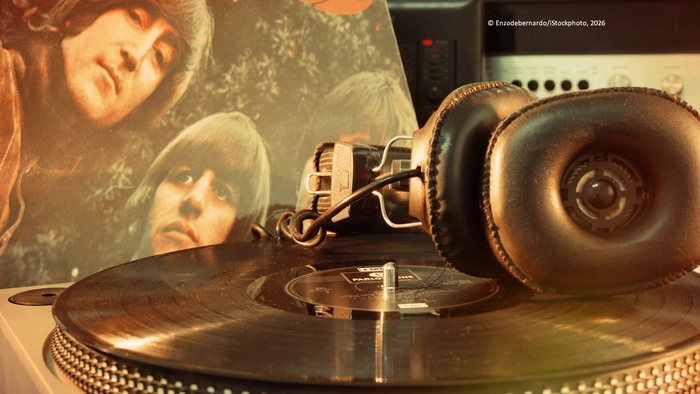
The story of one of the most popular bands in history begins in the industrial city of Liverpool. During the late 1950s, four teenagers named John Lennon, Paul McCartney, George Harrison, and Ringo Starr were living quite ___ (1) lives. They were students who spent their free time listening to rock and roll records from the United States. In ___ (2) days, Liverpool was a busy port, and sailors brought back new music that was hard to find somewhere else. The boys started playing together in small halls, learning how to write their own songs and play their guitars. They didn’t have much money, but they had a lot of energy and a dream to be the best music group in the world. Eventually, they chose the name ‘The Beatles’, which was a clever mix of the word ‘beetle’ and the musical term ‘beat’.
Before they became superstars, they had to work very hard in Hamburg, Germany. They ___ (3). in small rooms and played music for eight hours every single night. The clubs were very crowded, but this difficult experience allowed them to become professional. They learned how to entertain a loud audience and sing in harmony for a long time. When they returned home to Liverpool, they were a completely different band. They started playing at the Cavern Club, which was a dark cellar where teenagers went to escape the cold weather and listen to the new sound. The fans there were very ___ (4) because they knew they were watching something incredible.
By 1963, everything changed with the release of their first albums. A new word, ‘Beatlemania’, was created to describe the crazy behaviour of their fans. Whenever the band arrived at a theatre or a radio studio, thousands of girls would scream so loudly that the music was impossible to hear. It was a cultural phenomenon that no one ___ (5) ever seen before. In 1964, they decided to ___ (6) to America for the first time. Their appearance on a popular television programme was watched by millions across the country. This was the start of a global revolution where British culture became popular.
The Beatles were also leaders in fashion. They wore smart suits without collars. Later, they wore bright, colourful outfits that looked like old military uniforms. Their music changed too. They stopped touring in 1966 and spent their time in the recording studio. They used new technology to make albums that were very complex. They sang about peace and love. The band finished in 1970 but their influence is still strong today.